类的继承
继承,是子类继承父类的特征和行为,使得子类对象具有父类的实例域和方法。 继承是面向对象编程中,不可或缺的一部分。
使用方法
与 ES5 通过修改原型链实现继承不同,类通过 extends 关键字实现继承,继承父类的所有属性和方法。
class Parent {}

class Child extends Parent {
  constructor() {
    super();
  }
}
⚠️ 注意: 子类必须在构造函数中调用 super 方法,否则新建实例会报错。这是因为子类自身的 this 指向,必须先通过父类的构造函数完成塑造,得到与父类同样的实例属性和方法,然后再对其进行加工,加上子类自己的实例属性和方法。如果不调用 super 方法,子类就无法得到 this 指向。
如果子类没有定义构造函数,这个方法会被默认添加。也就是说,不管有没有显式定义,任何一个子类都有构造函数。
另一个需要注意的是,在子类的构造函数中,只有调用 super 之后,才可以使用 this 关键字,否则会报错。
这是因为子类实例的构建,基于父类实例,只有 super 方法才能调用父类实例。
class Parent {
  constructor(x, y) {
    this.x = x;
    this.y = y;
  }
}

class Child extends Parent {
  constructor(x, y, age) {
    this.age = age;
    // ReferenceError 引用错误
    // 错误原因:在调用 super 前调用 this

    super(x, y);

    // 正确
    this.age = age;
  }
}
访问父类
通过 Object.getPrototypeOf() 方法可以用来从子类上获取父类。
Object.getPrototypeOf(Child) === Parent;
因此,可以通过此方法判断,一个类是否继承了另一个类。
super
super 关键字,既可当作函数使用,也可以当作对象使用。
当 super 作为函数调用时,代表父类的构造函数。
ES6 要求,子类的构造函数继承父类时必须执行一次 super 函数。而且,super() 函数仅能在构造函数中执行,否则会报错。
class Parent {}

class Child extends Parent {
  constructor() {
    super();
  }
}
虽 super 代表了父类 Parent 的 构造函数,但是返回的是子类 Child 的实例,即 super 内部的 this 指的是 Child,因此 super() 在这里相当于:
Parent.prototype.constructor.call(this);
当 super 作为对象时:
- 在普通方法中,指向父类的原型对象
- 在静态方法中,指向父类
普通方法
在普通方法中,super 指向父类的原型对象。
class Parent {
  console() {
    return 'Hello world!';
  }
}

class Child extends Parent {
  constructor() {
    super();

    const result = super.console();

    console.log(result);
    // Hello world!
  }
}
上面代码中,子类 Child 当中的 super.console(),就是将 super 当作一个对象使用。这时,super 在普通方法之中,指向 Parent.prototype,所以 super.console() 就相当于 Parent.prototype.console()。
⚠️ 注意:ES6 规定,在子类普通方法中通过
super调用父类的方法时,方法内部的this指向当前的子类实例。
🌰 示例:
class Parent {
  constructor() {
    this.x = 1;
  }
  print() {
    console.log(this.x);
  }
}

class Child extends Parent {
  constructor() {
    super();
    this.x = 2;
  }
  console() {
    super.print();
    // print 方法执行时 this 实际指向的是子类实例
  }
}

const child = new Child();

child.console();
// 2
静态方法
在子类的静态方法中通过 super 调用父类的静态方法时,方法内部的 this 指向的是 当前的子类,而不是子类的实例。
class Parent {
  constructor() {
    this.x = 1;
  }
  static console() {
    console.log(this.x);
  }
}

class Child extends Parent {
  constructor() {
    super();
    this.x = 2;
  }
  static print() {
    super.console();
  }
}

Child.x = 3;

Child.print();
// 3
⚠️ 注意: 使用
super的时候,必须显式指定是作为函数,还是作为对象调用,否则会报错。
class Parent {}

class Child extends Parent {
  constructor() {
    super();
    console.log(super);
    // 报错
  }
}
在子类调用父类方法 this 指向总结:
super作为对象时- 在子类的 普通方法
super指向 父类的原型对象Parent.prototype- 通过
super调用父类的方法时,方法内部的this指向当前的 子类实例
- 在子类的 静态方法
super指向 父类,而不是父类的原型对象- 通过
super调用父类的方法时,方法内部的this指向当前 子类,而不是子类的实例
- 在子类的 普通方法
类的原型对象
大多数浏览器的 ES5 实现之中,每一个对象都有 __proto__ 属性,指向对应的构造函数的 prototype 属性。
Class 作为构造函数的语法糖,同时有 prototype 属性和 __proto__ 属性,因此同时存在两条继承链。
- 子类的
__proto__属性,表示 构造函数的继承,总是指向 父类。 - 子类的
prototype属性的__proto__属性,表示 方法的继承,总是指向 父类的prototype属性。
<br />
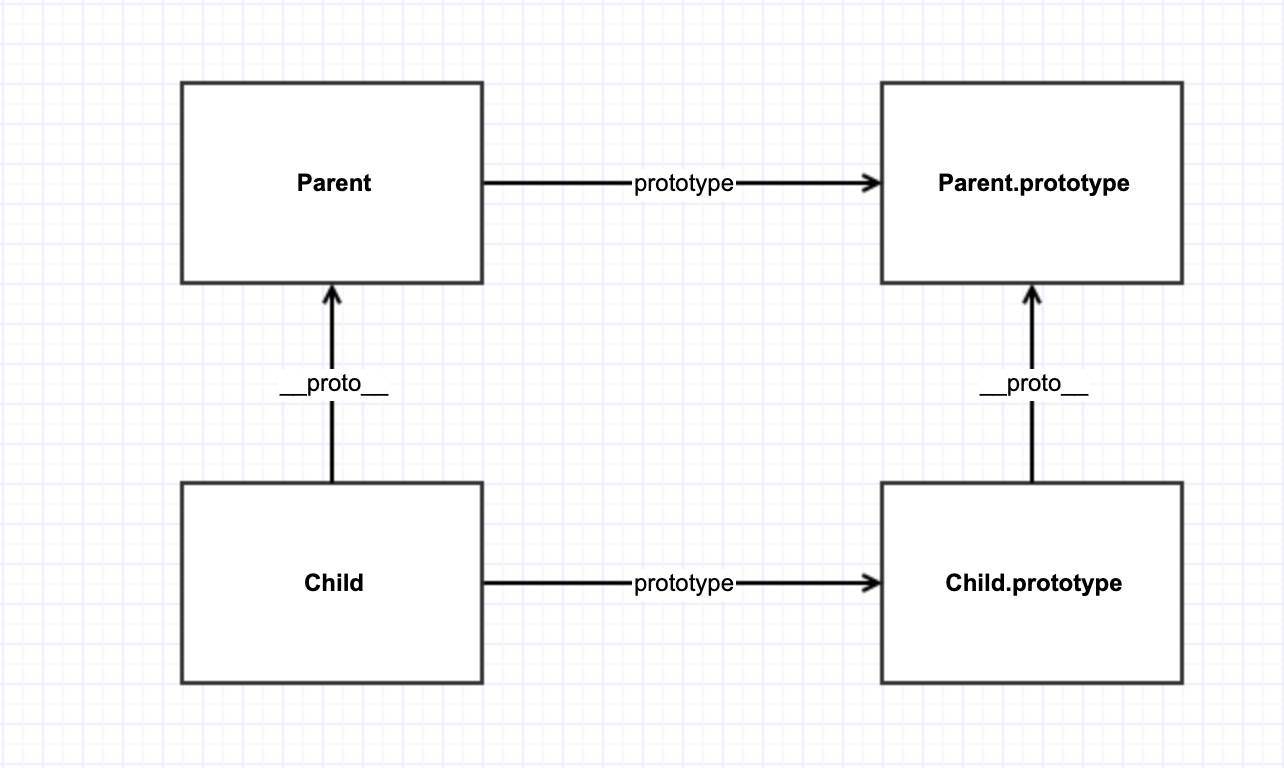
<br />
class Parent {}

class Child extends Parent {}

console.log(Child.__proto__ === Parent);
// true

console.log(Child.prototype.__proto__ === Parent.prototype);
// true
类的继承是按照下面的模式实现的:
class Parent {}

class Child {}

// 1. Child 子类的实例对象继承 Parent 父类的实例对象
Object.setPropertyOf(Child.prototype, Parent.prototype);

// 2. Child 子类继承 Parent 父类的静态属性
Object.setPropertyOf(Child, Parent);

const child = new Child();
上述实现等价于:
Object.setPropertyOf(Child.prototype, Parent.prototype);
// 等价于
Child.prototype.__proto__ = Parent.prototype;

Object.setPropertyOf(Child, Parent);
// 等价于
Child.__proto__ = Parent;
这两条继承链,可以这样理解:
- 作为一个对象,子类的隐式原型对象(
__proto__属性)是父类(Parent) - 作为一个构造函数,子类的显式原型对象(
prototype属性)是父类的显式原型对象(prototype属性)的实例
子类继承内置对象
class Child extends Object {}

// 相当于
console.log(Child.__proto__ === Object);
// true
console.log(Child.prototype.__proto__ === Object.prototype);
// true
这种情况下,Child 其实就是构造函数 Object 的拷贝,Child 的实例(对象)就是 Object 的实例(对象)。
不存在继承关系
class Parent {}

Parent.__proto__ === Function.prototype;
// true
Parent.prototype.__proto__ === Object.prototype;
// true
这种情况下,Parent 作为一个基类(即不存在任何继承),就是一个普通函数,所以直接继承 Function.prototype。
但是,Parent 实例化后返回一个空对象(即 Object 实例),所以 Parent.prototype.__proto__ 指向构造函数(Object)的 prototype 属性。
内置对象的继承
内置对象(又称原生构造函数)是指内置的构造函数,通常用来生成数据结构。
过去,原生构造函数是无法继承的,比如,不能自己定义一个 Array 的子类。之所以这样,是因为子类无法获得原生构造函数的内部属性,通过 Array.apply() 或者分配给原型对象都不行。原生构造函数会忽略 apply 方法传入的 this,也就是说,原生构造函数 this 无法绑定,导致拿不到内部属性。
而在 ES6 中允许继承原生构造函数定义子类,因为 ES6 是先新建父类的实例对象 this ,然后再用子类的构造函数修饰 this,使得父类的所有行为都可以继承。下面是一个继承 Array 的例子。
class SubArray extends Array {
  constructor(...args) {
    super(...args);
  }
}

var arr = new SubArray();
arr[0] = 12;
console.log(arr.length);
// 1

arr.length = 0;
console.log(arr[0]);
// undefined
上面的例子说明,extends 关键字不仅可以用来继承类,还可以用来继承原生的构造函数。因此可以在原生数据结构的基础上,定义自己的数据结构。
⚠️ 注意: 继承 Object 的子类,有一个行为差异。
class SubObject extends Object {
  constructor() {
    super(...arguments);
  }
}
const obj = new SubObject({ attr: true });

obj.attr === true;
// false
上述代码中,SubObject 继承了 Object ,但是无法通过 super 方法向父类 Object 传参。这是因为 ES6 改变了 Object 构造函数的行为,一旦发现 Object 方法不是通过 new Object() 这种形式调用,ES6 规定 Object 构造函数会忽略参数。
参考资料: